
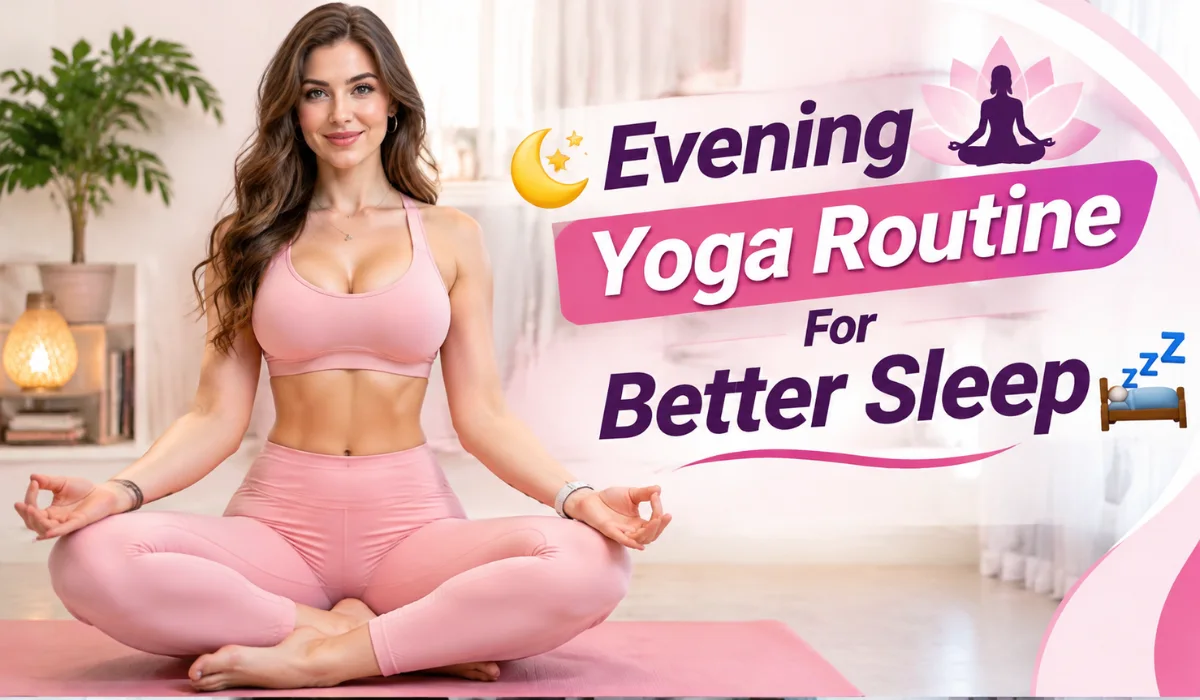
You stare at the ceiling at midnight while your brain replays every email, traffic jam, and worry from the day. Your shoulders feel tight like rocks, and sleep feels miles away. A gentle Evening Yoga Routine For Better Sleep changes that story by helping your body shift from busy daytime mode into deep rest. You do not need fancy gear, a gym membership, or years of practice to feel the difference. Simple slow stretches and calm breathing tell your body it is safe to power down. Whether you live in a busy city apartment or a quiet town, ten to twenty quiet minutes at night can help you drift off faster and wake up refreshed. Look at how legs-up-the-wall pose lets the spine rest flat against the floor while gravity eases tired legs. That quiet reset helps lower physical tension right before you slip under the covers.
What Is the Best Evening Yoga Routine For Better Sleep?
What is the best evening yoga routine for better sleep? The best plan is one that feels easy, slow, and pain-free. Fast workouts, bright lights, and hard pushes wake the body up instead of winding it down. A bedtime yoga routine for a peaceful night uses gentle floor poses, long exhales, and soft light. A restorative yoga routine for better sleep often uses pillows or blankets so muscles can truly let go. Think of it as a calming yoga sequence for a restful night rather than a fitness test. If a pose hurts or pinches, back off right away and breathe softly.
Why Is Evening Yoga Beneficial for Better Sleep?
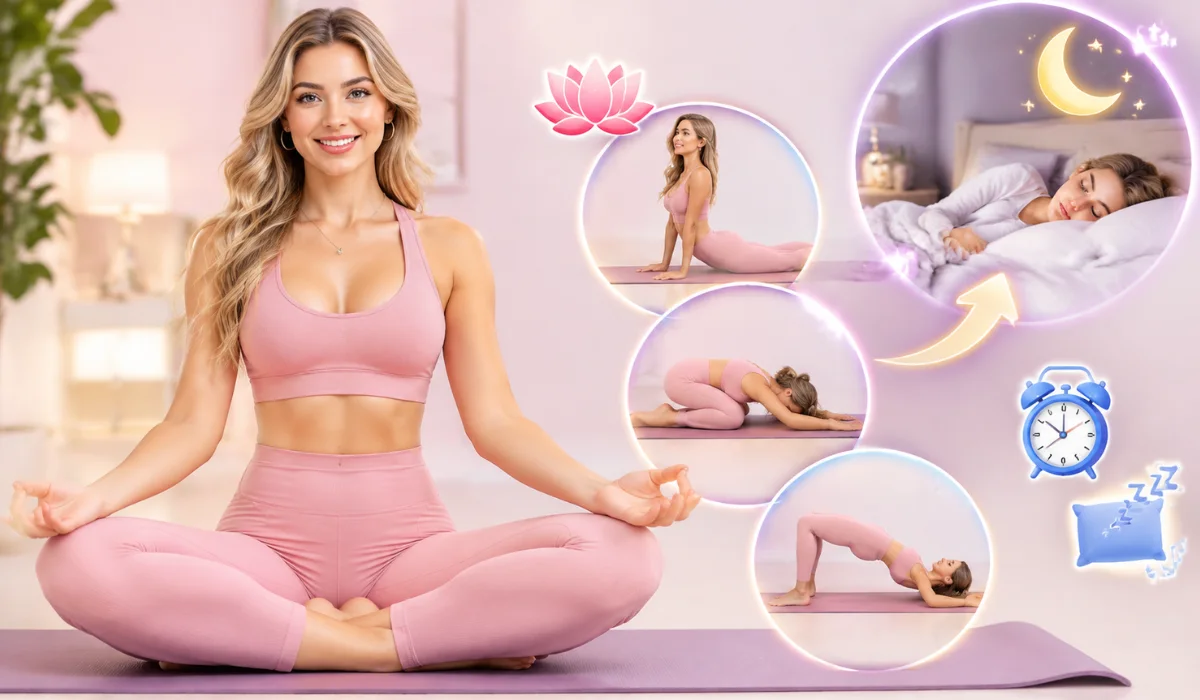
Long days keep the body's "fight-or-flight" alarm switched on long after work ends. Research on sleep and the nervous system shows that slow yoga and steady breathing help turn on the parasympathetic nervous system, which slows heart rate and prepares the body for rest. Studies also link regular yoga practice with better sleep quality, fewer nighttime wake-ups, and calmer mood scores. Why is evening yoga beneficial for better sleep? Because gentle movement releases tight muscles from sitting, driving, or standing all day. When your neck, back, and hips stop pulling, you toss and turn less. Slow breathing also signals the mind to stop racing so sleep comes naturally.
"Your day is like your marathon. It doesn't matter whether you're walking, standing or sitting at a desk, your muscles are being tested. Stretching is a way to relax them so you can rest more comfortably." — Physical therapist guidance via Hospital for Special Surgery
Read Also: 10 Best Yoga Exercises For Hip Flexibility to Relieve Tight Hips.
Top 10 Evening Yoga Routine For Better Sleep
Here is the Top 10 Evening Yoga Routine For Better Sleep designed to relax stiff joints and quiet a busy mind. Move slowly through each pose and take smooth breaths through your nose.
1. Cat-Cow Stretch (Gentle Spine Flow)
Start on hands and knees with wrists under shoulders and knees under hips. Breathe in, drop your belly, and lift your chest and tailbone softly. Breathe out, round your back toward the ceiling, and tuck your chin gently. This smooth yoga stretch for relaxation after work wakes up stiff back muscles without strain. Do six to eight slow rounds to shake off desk slump.
2. Child’s Pose (Supported Rest)
From hands and knees, sit your hips back toward your heels and rest your forehead on the floor or a pillow. Stretch your arms forward or rest them beside your feet. Let your shoulders drop heavy toward the ground. Many people love this pose as part of a yoga routine to relax the body before bed. It eases lower-back tightness and gives your eyes and mind a quiet break.
3. Legs-Up-the-Wall Pose (Viparita Karani)
Sit close to a wall, then swing your legs up the wall as you lie flat on your back. Rest your arms out to the sides with palms facing up. Close your eyes and take slow, even breaths for two to five minutes. This classic relaxing floor yoga pose before going to bed eases swelling and heaviness in tired legs and feet. It is also a favorite simple bedtime yoga routine without equipment since a plain wall does all the work.
4. Supine Spinal Twist (Gentle Back Release)
Lie on your back and hug both knees into your chest. Drop both knees gently to the right while keeping both shoulders on the floor. Turn your head left if your neck feels comfortable, then switch sides after a few slow breaths. A soft twist helps release tension along the spine and ribs. Keep the movement easy and let gravity do the work.
5. Reclined Bound Angle Pose (Supta Baddha Konasana)
Lie on your back and bring the soles of your feet together while letting your knees open wide. Place a pillow under each knee if your inner thighs feel tight. Rest one hand on your belly and one on your heart. This gentle hip opener works well in a relaxing yoga routine after a stressful day. Soft breathing here helps steady your pulse before sleep.
6. Seated Forward Fold (Paschimottanasana)
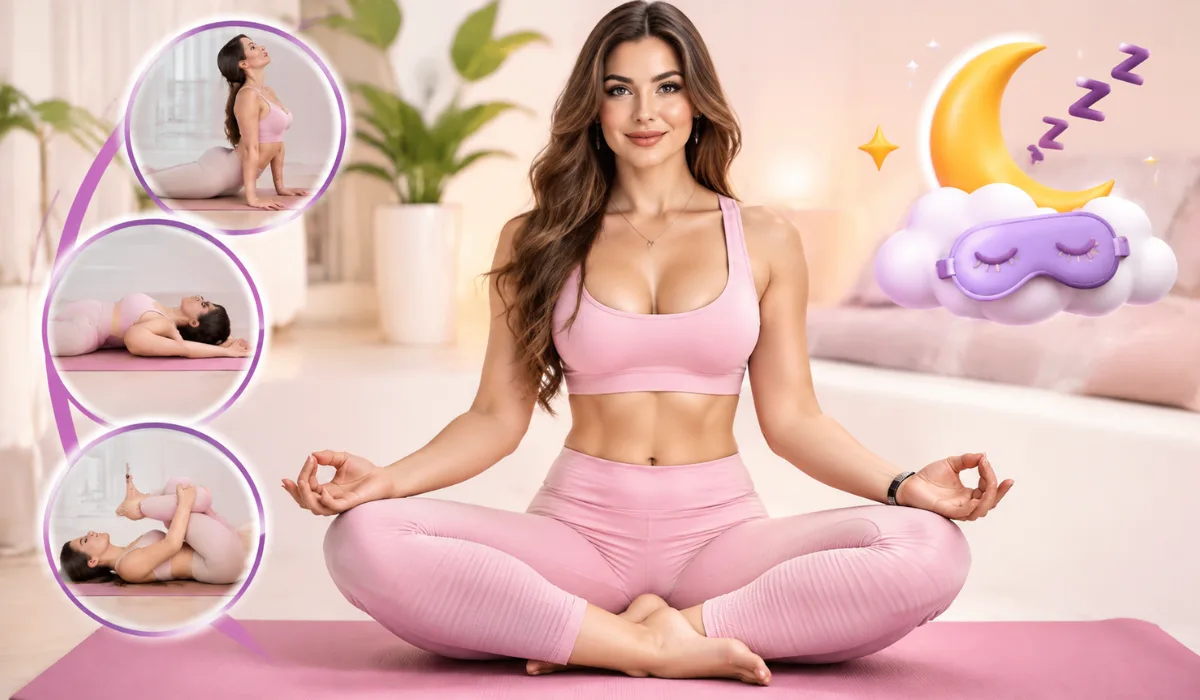
Sit tall with legs straight out in front of you, or bend your knees slightly if your hamstrings feel tight. Hinge forward from your hips and let your hands rest on your shins, ankles, or a folded towel. Relax your neck and jaw. Forward folds turn attention inward and stretch the back of the legs and spine. Never force your nose to your knees—comfort matters most at night.
7. Knees-to-Chest Rock (Apanasana)
Lie on your back and pull both knees gently toward your chest. Rock softly side to side like a gentle wave. Feel the flat surface of the floor massage your lower back. This simple move feels great after long hours in a chair or car. It helps the lower back unwind in under a minute.
8. Seated Neck and Shoulder Release
Sit comfortably on the floor, a chair, or the edge of your bed. Drop your right ear toward your right shoulder and let your left shoulder relax down. Switch sides slowly after five calm breaths. Stress often hides right between the ears and shoulders. Gentle neck care helps ease tension headaches before bedtime.
9. Happy Baby Pose (Gentle Hip & Back Stretch)
Lie on your back and lift your feet toward the ceiling with knees bent. Hold the backs of your thighs, calves, or outer ankles, keeping tailbone and head down. Rock gently if it feels smooth and easy. This playful pose relieves pressure in the lower back and hips. Skip it if your knees or hips feel sore.
10. Corpse Pose With Deep Belly Breathing (Savasana)
Lie flat on your back with legs uncrossed and arms slightly away from your body. Let your feet fall open and soften the muscles around your eyes and mouth. Inhale for four counts and exhale slowly for six counts. Longer exhales help calm the nervous system and settle restless thoughts. Stay here for three to five minutes until you feel heavy and peaceful. Using a soft pillow under the chest or head makes nighttime poses feel cozy and effortless. That extra support helps tense muscles let go much faster.
Read Also: Morning Yoga Exercises For Energy: Boost Your Day
How Long Should I Practice Yoga Before Going to Bed?
How long should I practice yoga before going to bed? Ten to twenty minutes is enough for most people to feel calmer. Even five minutes of slow breathing and two gentle poses beats skipping your routine completely.
Timing matters just as much as minutes. Try starting your evening yoga routine for better sleep about 30 to 60 minutes before lights out. That buffer gives your body and brain time to cool down without rushing straight from a screen to your mat.
| Routine Length | Best For | What to Include |
| 5–7 Minutes | Busy nights or beginners | Child's Pose, Cat-Cow, slow belly breathing |
| 10–15 Minutes | Everyday wind-down | 4–5 floor poses plus 3 minutes of quiet breathing |
| 20+ Minutes | High-stress days or weekends | Full gentle sequence with pillow support and longer rest |
Evening Yoga for Stress, Anxiety, and Seniors
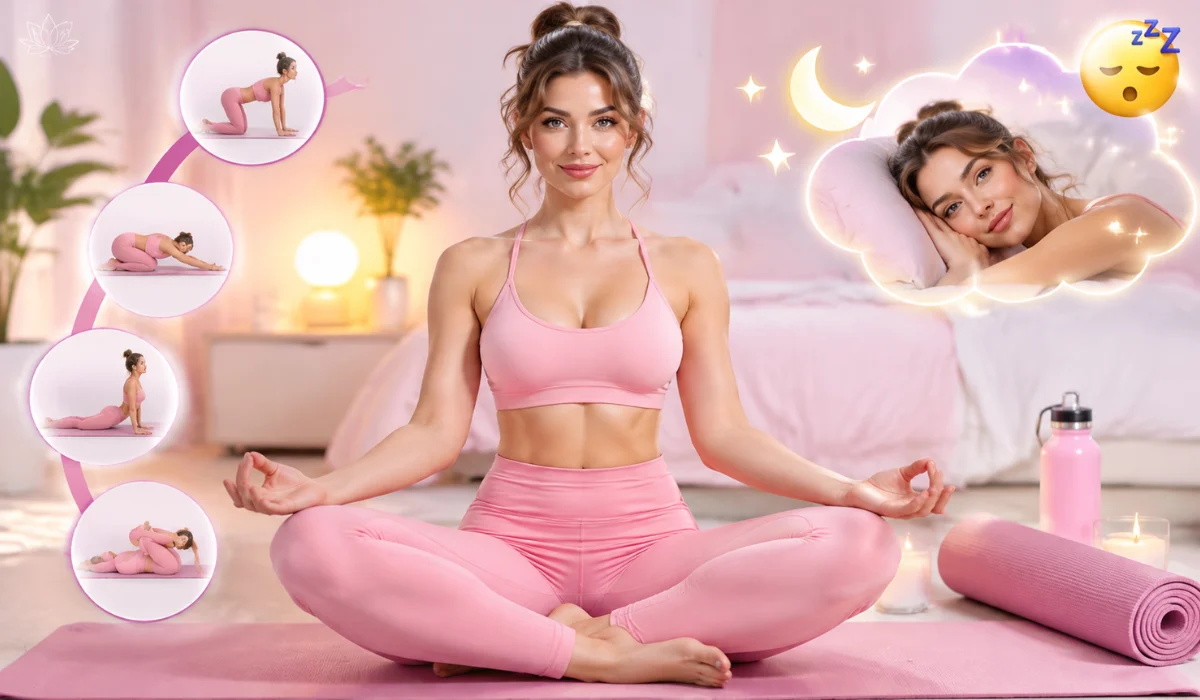
An evening yoga routine for better sleep and anxiety works best when paired with slow, steady breathing. Racing thoughts often calm down when you focus on the feel of your breath moving in and out. Keep movements slow and skip any fast transitions that make you feel winded.
An evening yoga routine for better sleep for seniors should focus on safety, balance, and comfort. Many older adults prefer doing stretches on a bed, a sturdy chair, or a thick mat near a wall. Move smoothly, avoid deep twists if your back feels stiff, and talk with a doctor if you have balance concerns or joint pain.
"Rest when you're weary. Refresh and renew yourself, your body, your mind, your spirit. Then get back to work." — Ralph Marston
Extra Tips That Make Nighttime Yoga Work Better
Good best evening yoga exercises for peaceful sleep shine brightest when your room helps you unwind. Dim bright overhead lights thirty minutes before you start so your body gets natural evening cues. Put your phone on silent across the room so alerts do not pull you back into work mode. Keep your routine simple so you actually stick with it night after night. Roll out a mat or blanket in the same quiet corner every evening. Consistency builds a strong habit that tells your brain, "Time for rest."
Frequently Asked Questions
1. Can I do evening yoga right on my bed?
Yes, you can do simple stretches like Child's Pose with a pillow, seated neck stretches, and slow belly breathing right on a firm bed. A flat rug or yoga mat on the floor gives extra support for your spine, though comfort always comes first.
2. Will evening yoga give me too much energy to sleep?
Gentle, slow yoga calms the body rather than energizing it. Save fast flows, strong core work, and big backbends for earlier in the day so your heart rate stays low at night.
3. How soon should I eat before practicing bedtime yoga?
Try to finish heavy meals at least two hours before lying down or folding forward. If you feel a little hungry late at night, a small banana, warm milk, or handful of nuts sits lightly on the stomach.
4. Do I need to be flexible to start yoga for sleep?
No, you do not need to touch your toes or bend like a pretzel. Bend your knees, use pillows or cushions, and stop before any sharp pain so your muscles can relax.
Start Tonight and Sleep Easier Tomorrow
You do not need a complicated plan to get better rest tonight. Pick three calm poses from this guide, dim the lights, and breathe slowly for ten minutes before bed. Small, steady habits like this help turn restless nights into calm, restorative sleep.