
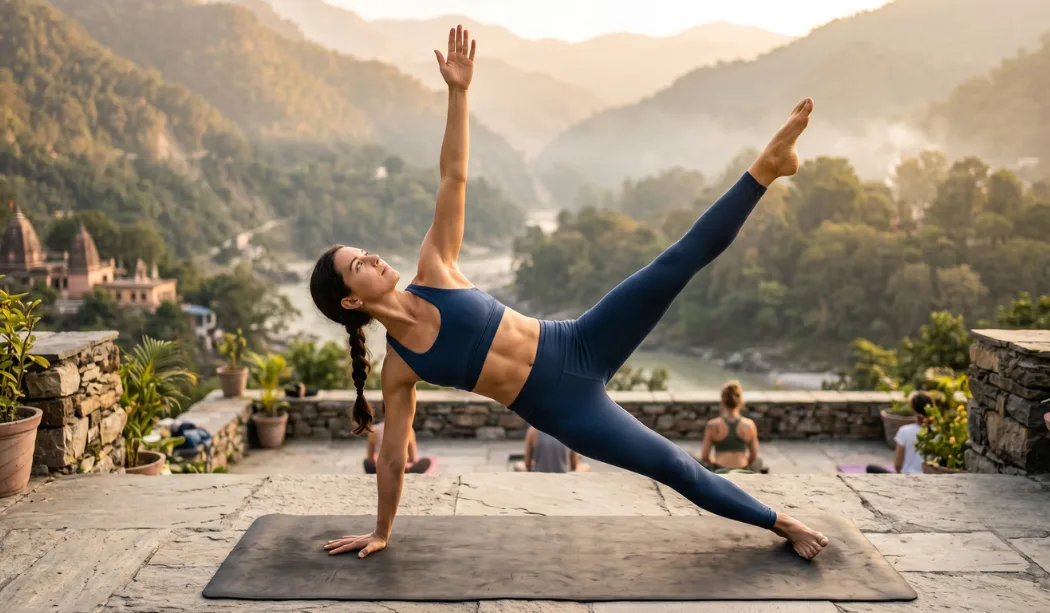
Balance and stability can be found with the middle part in your physique. When you consider creating a healthy midsection it is possible to imagine the endless crunches you can do on your exercise mat. In reality, the yoga mat is an entirely different and highly efficient method to develop strong, efficient strength.
The act of focusing on specific patterns helps you train your muscles to connect. This connection between your body and mind is what makes deep-center conditioning so special. It molds your midsection, while increasing your ability to move each daily.
Why Is Core Strength Important in Yoga?
The center of your body functions like the car's chassis. It joins the upper and lower bodies and stabilizes your spine as well as protects the lower back. When you move around an unbalanced midsection can prevent injury and helps improve your posture.
In a workout it serves as the anchor. It helps you maintain the stability necessary to keep your balance steady and to safely ascend into inversions. Without this solid foundation the limbs are forced to have to exert twice as much effort and can cause tension.
Establishing this foundation directly connects your breath with the movements you perform. This creates a strong base which makes each posture appear more relaxed, secure and more in control.
Yoga Exercises For Core Strength: Your Complete Guide
Central power that is true isn't only about the muscles that you see. It's about the sub-conscious layer of your abdomen, which provide support to your internal organs as well as the spine. The specially designed yoga routines for strengthening your core concentrate on the deep stabilizers at every angle.
Regularly performing these moves helps develop functional and real-world strength. Instead of straining muscles in one area instead, you train your entire body to stabilize and lift in one unit.
Read also: Yoga Lifestyle Tips For Healthy Living: 7 Proven Tips to
Best Yoga Poses for Core Strength
For a strong and durable centre, you must have an even mix of hold and fluid movements. This article will help you focus on your sides, front and back muscles to build the perfect balance and total body stability.
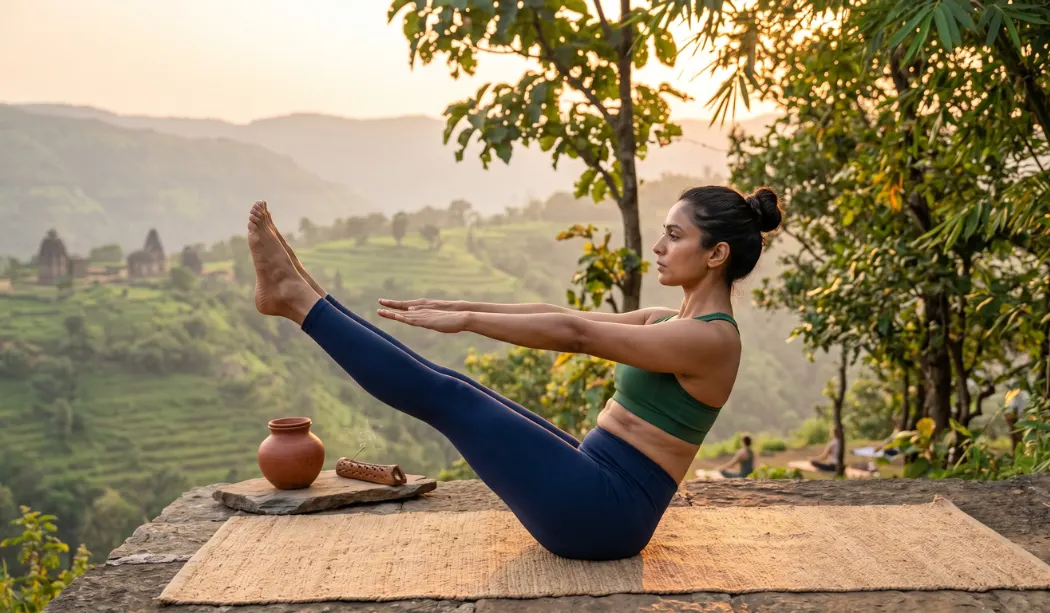
1. Boat Pose (Navasana)
The shape of this is the most enduring exercise in Central endurance. You should lie on your mat and lift your chest and then lean slightly back. Get your feet up off the floor while making sure your knees are bent. stretching your legs into an V-shape. Move your arms outwards and parallel to the ground. This will activate your abdominal muscles as well as your hips flexors deep within seconds.
2. Plank Pose (Phalakasana)
The plank, the classic one of the greatest yoga poses to build your core strength. Keep your hands in your shoulders and then move forward with your feet. Your body should be in a straight alignment from your head down up to your feet. Push the floor off with force in order to stretch your upper back, as well as your whole abdominal muscle.
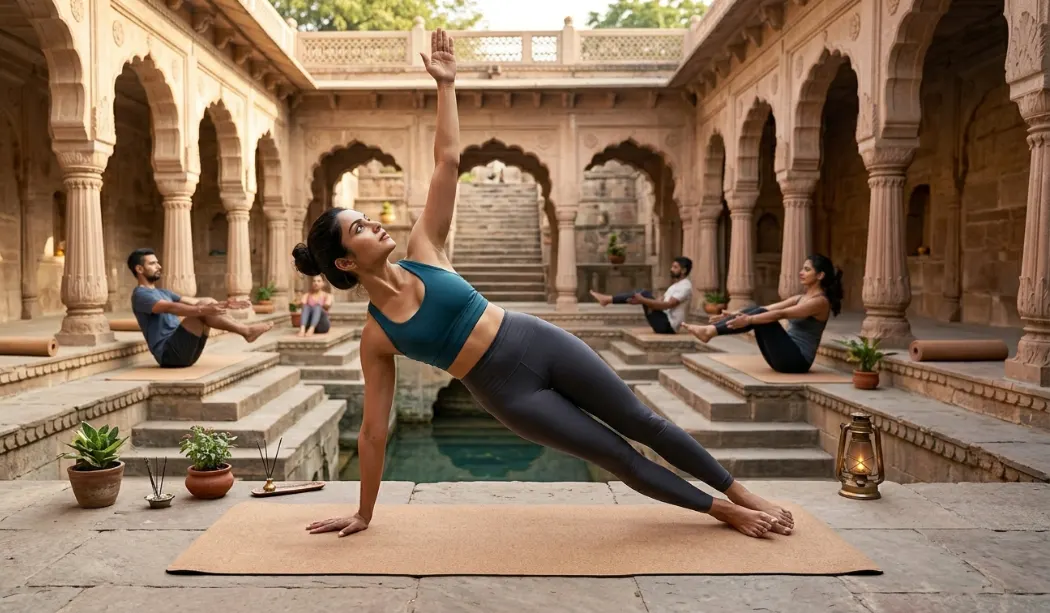
3. Side Plank (Vasisthasana)
For a toned obliques, to roll your feet onto the edge of your left foot. Then raise your left arm towards the ceiling. Your hips should be lifted high so that they don't slide. The shape is designed to target the muscles on your sides and waist, which are vital to bending and stability from side to side.
4. Sphinx Pose (Salambhasana Variation)
Lying on your back, place your forearms resting on the flooring. Place your pubic bone in the downwards position and then lift your chest. The belly button should be pulled up off the mat, allowing the abdominal wall that is deepest as you gently strengthen your back muscles in the lower part of your body.
Top 10 Yoga Exercises For Core Strength to Do at Home
It doesn't require an elaborate studio space for a strong midsection. Engaging in yoga moves to strengthen your the core in the comfort of your living space will allow you to concentrate on your posture without interruptions.
- Cat-Cow using abdominal bracing All fours on all fours, turn your back and squeeze your belly button towards your spine while you exhale.
- Three-Legged Dog Knee Tucks: Lift one leg before shifting forward into the plank, and pull your knee to your nose.
- Warrior III Keep one foot on the floor and reach your arms outward and bending your opposite leg in reverse and forming an uniform line that runs with the floor.
- Bridge Pose Lifts: Lie on your back, raise your hips and stretch your glutes, which will build your back muscles.
- Locust Pose Place your body on the belly and raise your chest, arms and legs off the ground all at once.
- Extended Chair Pose Deeply squat like you're sitting in a chair and bring your lower abdomen towards the lower part of your back.
- Dolphin Plank: Lower your forearms towards the mat in a plank-like position to work harder on your shoulders and the midsection.
- Half-Boat PULses: Begin to lower yourself halfway down to Boat Pose, hold for some breaths, and then push your body back using the abdominal muscles.
- Twisted Chair From the Chair Pose position, place your palms in a row and then twist your body to push your elbow away from of the knee opposite.
- Goddess Pose with Side Crunches Keep a wide, deep squat and then bend your body sideways to bring the elbows of your legs.
Yoga Exercises for Stronger Hips and Core
Your hips, as well as your lower back are tightly linked to the abdominal wall. If your hip stabilizers are not strong and your lower back puts the brunt of stress and can cause discomfort and aches that are not easing off.
The integration of yoga routines to strengthen your hips and the core will ensure your pelvis remains stable throughout the most strenuous movement. Poses like the Bird-Dog (extending the opposite leg and arm onto all fours) strengthen your hips, and return to stay perfectly in place while you move your limbs easily.
Yoga for Core and Back: Balancing Front and Rear Muscles
An error that is common is focusing exclusively on the front portion of your body. Stability requires the same strength and endurance in the back. The practice of balancing your routine and focusing on yoga to strengthen your spine and core well-being can prevent muscle imbalances and safeguards your spine column.
When you are able to strengthen your front and do not balance the back, the posture pulls upwards, creating stress. By balancing both sides, your spine remains well-supported and perfectly straight.
| Focus Area | Primary Yoga Poses | Key Muscle Benefits |
| Front Body | Boat Pose, Plank Pose | Develops deep abdominal to increase endurance |
| Side Body | Side Plank, Triangle Pose | Enhances obliques' strength to prevent the stability of twists |
| Back Body | Locust Pose, Bridge Pose | The firmness of the lower glutes and the back in order to safeguard the spine |
Yoga for Core Strength and Flexibility: Moving with Power
Physical fitness does not only about being strong and strong. It is about a training program for flexibility and strength that helps the body to be solid throughout a full flexible movement.
Engaging in yoga for endurance and flexibility helps you build muscles that are large and strong. As an example, holding an intense crescent lunge takes deep core stability in order to remain straight, and simultaneously opens to stretch your hip flexors.
15 Minute Yoga Core Workout: A Daily Fast Routine
There is no need for long hours to make real improvements. This fast 15-minute yoga workout is specifically designed to fit within any hectic schedule and provide maximum muscle stimulation. Consistency beats duration every single time. Just 15 minutes in your yoga mat each day will yield better results as opposed to doing an all-out and exhausting exercise every single week.
Advanced Yoga Poses for Core Training
If you've been practicing fundamentals for a while and are looking to push yourself beyond your limitations. Experimenting with the more advanced yoga poses to the purpose of core exercise is a matter of absolute focus as well as precise body control as well as a strong muscular endurance.
What are Advanced Yoga Exercises for Abs?
Modern work that is truly advanced moves away from the traditional floor forms and stretches to defy gravity.
- The Crow Pose (Bakasana): Balancing your knees against the back of your upper arms, while elevating your feet up off the ground.
- L-Sit Scales (Tolasana): Pressing your hands against the ground and then raising your whole body off of the mat with only abdominal compression.
The latest techniques demand that your upper body as well as your core are in sync to help support your body's and weight in a safe way.
Read also: Yoga for runners to prevent injuries.
Specialized Routines for Specific Wellness Goals
Yoga can be adapted to all phases of life, as well as individual needs. If you're looking to slim down your waist naturally, or build your fitness after having your baby practicing mindfully can help guide you on your path.
Yoga Exercises to Tone Abs Naturally
Instead of putting your body to perform routine, repetitive gym exercises Yoga uses your body weight to shape and strengthen your muscles. This method of natural development helps you get a strong, well-balanced definition while not straining joints.
Yoga for Core Strength After Pregnancy
The restoration of your midsection post-childbirth demands a lot of patience and care. Using targeted yoga exercises to build core strength during the birth aids in healing conditions such as diastasis recti (separated abdominal muscles). Try easy pelvic tilts as well as breathing exercises prior to moving onto intensive planks.
Yoga for Core Strength and Mental Focus
The balancing pose is a challenge that requires focus and concentration. Engaging in yoga to build core strength and focus requires you to align your abdominal muscles deep through steady and calm breathing. It will train your brain to stay still, calm and firmly anchored to the present.
How Long Does Yoga Take to Strengthen the Core?
If you do your best to practice it mindfully at least three times per week, you should be able to notice a significant change in your posture in just three or four weeks. Your posture will appear more balanced, and your back will be significantly more relaxed after long hours of sitting.
"True physical transformation doesn't take place over night. It's the result being on the mat regularly, breathing deeply and observing your boundaries."
At the end of two months at the two-month mark, your endurance in deep muscles will significantly increase. As you progress, exercises feel less tense as well as your balance becomes more stable, and daily moves feel effortless and well-coordinated.
Frequently Asked Questions
Can yoga completely replace gym crunches for getting flat abs?
Yes. The regular abdominal crunches cause neck strain and focus on the muscles of the surface. Yoga workouts target the most deep layers of abdominal wall. They give you an enlarge, more secure and a more efficient midsection.
Is it safe to practice these core poses if I have lower back pain?
Poses that are gentle like Sphinx and the Bird-Dog pose are great to ease lower back pain. But, avoid extreme twists and planks when you're experiencing severe intense discomfort. Pay attention to the body.
How many times a week should I do yoga for core strength?
To get the best outcomes, try at least three or four brief sessions per week. It is necessary to be consistent in developing lasting muscle memory and powerful physical strength.